This article is the first in a 3-part series covering the impact of social isolation on older adults, addressing the key challenges with solutions for maintaining holistic well-being.
‘Deconditioning’ and the Potential of Muscle Mass Loss
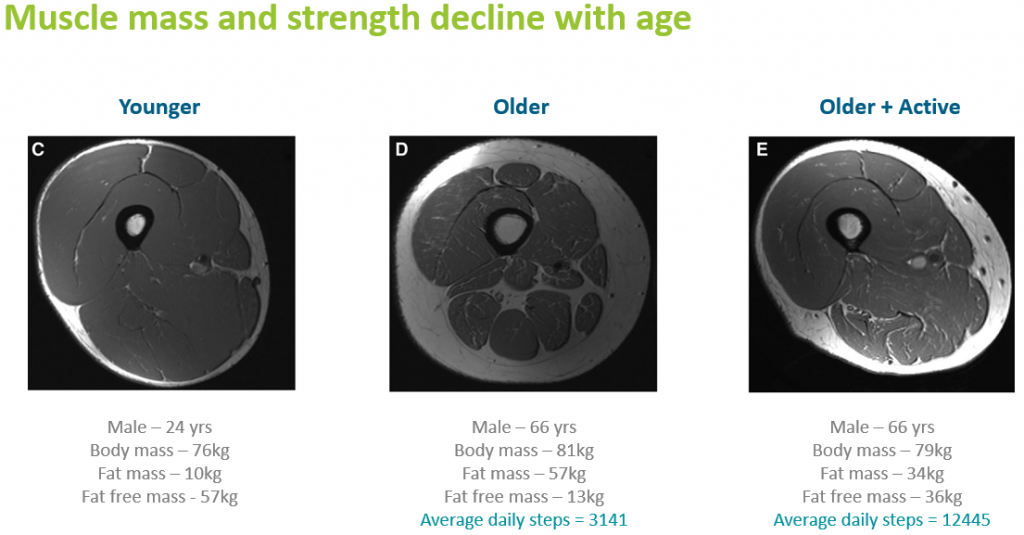
For many people, staying at home may lead to a reduction in time spent walking and engaging in other physical activities. Even relatively short periods (~2 weeks) of very low physical activity / low daily step count (<2,000 – 3,000 steps per day) are known to adversely affect skeletal muscle health (1, 2).
This is of particular concern among older adults who are already at high risk of muscle mass and strength loss.
Unlike younger adults who “bounce back” relatively easily from transient periods of inactivity, recovery in older adults is slow and may be incomplete (1, 2).
As such, these periods of inactivity may have long lasting negative effects on physical function and mobility. Fortunately, simple measures can be taken to minimise the deterioration in muscle health.
Nutrition and Maintaining Muscle Mass for Older Adults
What we eat can help us to maintain our muscle health while remaining at home, especially when combined with resistance exercise.
Protein-rich foods combined with a balanced diet of whole grains, fruits, and vegetables can be an important part of staying healthy and maintaining mobility.
Protein Power
Compared to younger adults, older adults are less efficient at using the protein they eat (found in foods like milk, yoghurt, fish, eggs, meat, beans, nuts) to build new muscle (3). This means that older adults need more protein in their diets than younger ones and not eating enough protein can contribute to muscle loss.

Expert groups recommend that healthy older adults should consume 1.0 – 1.2 g of protein per kilogram of body weight per day to help preserve muscle (4, 5).
It is particularly important to ensure that older adults continue to consume adequate amounts of protein while isolating.
Some tips include:
- Prioritise protein – as physical activity levels fall during social distancing, the number of calories we burn per day decreases and appetite may also decline. Prioritising protein-rich foods can help maintain a similar protein intake as before social distancing was introduced.
- Choose high quality sources – higher quality protein sources (e.g. milk, yoghurt, fish, eggs, meat, poultry) are better at stimulating muscle growth compared to lower quality protein sources (6). Getting a moderate-size serving of high quality protein (25-30 grams) at each meal can improve muscle retention.
- Boost breakfast – breakfast tends to be low in protein, so breakfast foods are an opportunity to boost daily protein intake. Making porridge with milk rather than water, adding Greek yoghurt to muesli or a smoothie, making an omelette or scrambled eggs, or drinking a glass of milk alongside your meal are all common ways of boosting protein at breakfast.
- Pair protein with exercise – the exercise will make muscles more efficient at using the protein from the meal to build new muscle (7).
- Pre-bed protein – consume a protein-rich snack (e.g. Greek yogurt, cottage cheese) before bed to boost muscle building rates overnight (8).
Calories Count
Studies indicate that consuming either too few or too many calories over several weeks can worsen muscle loss during periods of inactivity (9, 10).
It is normal for people to have a slightly lower appetite when they are less active than usual at home. However, if appetite drops considerably and results in weight loss, this may accelerate muscle loss.
 Small, nourishing snacks frequently throughout the day to give a constant source of protein (e.g. milky drinks, yoghurts, crackers and cheese, custard) and add extra calories to meals (e.g. add milk, skimmed milk powder or cream to soups and mashed potatoes, use full fat dairy products) are two ways to prevent appetite-related weight and muscle loss.
Alternatively, some people may find that, despite decreased activity levels, they are eating more than usual due to boredom or stress. In this case, eating plenty of fruit and vegetables which are low in calories and high in fibre can people stay full.
Prioritising protein-rich foods as discussed above and reducing intake of high-calorie, low protein foods (e.g. biscuits, chocolate, crisps, sweets, butter) can help reduce risk of weight gain.
Physical Activity to Maintain Muscle Mass
Use it or Lose it
The best way to protect muscles against the adverse effects of inactivity is to keep using them.
Resistance exercise, defined as exercising muscles against an external force (e.g. weights, resistance bands, our own body weight), is by far the most potent strategy to maintain muscle mass and strength.
Research has shown that incorporating resistance exercise during periods of reduced activity can attenuate or even abolish the decline in muscle mass (11, 12) and strength (12, 13).
Importantly, even relatively low amounts of resistance exercise appear to be effective once performed regularly (e.g. every other day) (12).
Although most older people may not have access to resistance training equipment at home, body weight exercises can be performed (e.g. sit-to-stands, wall push ups, leg extensions from a chair).
It is important for people to check with their doctor to find out if they have any contra-indications to exercise or if there are any reasons to modify their workout.
Reduce Sedentary Time – Exercise “Snacks”
Engaging in physical tasks around the house each day like gardening, active chores (e.g. sweeping, hoovering) or even walking around while on the telephone can help to minimise inactivity while staying at home, thus reducing the detrimental effect on muscle.
People can also break up prolonged periods of sitting with “exercise snacks”.
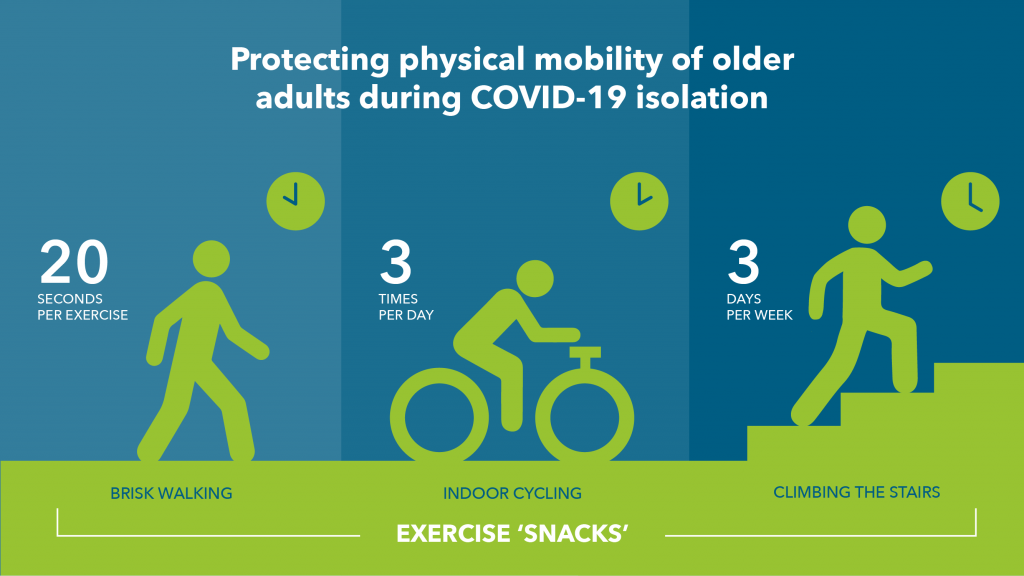
Exercise snacks are short bursts of exercise spread throughout the day (e.g. briskly climbing the stairs during ad breaks on TV).
A recent study reported that performing brisk stair climbing (approximately 20 seconds of climbing per “snack”) three times per day, three days per week, improved fitness and leg power in sedentary people (14).
Therefore, exercise snacks like these may help to reduce declines in fitness that occur during periods of inactivity.
Stay on Track
Staying motivated can be difficult, especially when we are isolated at home and separated from loved ones.
To maintain muscle health it is important to keep up the exercise and healthy eating for the duration of isolation. Some tips to help stay motivated include:
- Set goals about when and where to do the exercise (15)
- Choose activities you enjoy (16)
- Monitor your exercise using diaries or apps or ask a friend or family member to monitor you (15)
- Plan your protein-rich meals for the week ahead and make a shopping list
- Keep a stock of protein-rich foods (e.g. tinned fish, freeze extra poultry, meat and fish)
- Experiment with new protein-rich recipes to keep things interesting