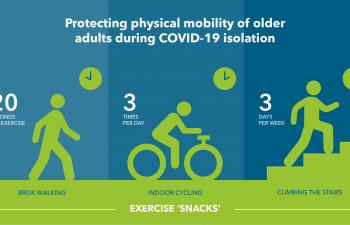

Staying at home with minimal human contact can significantly increase our feelings of loneliness. People of all ages may experience loneliness. However, older people, particularly those living alone, are especially vulnerable. Loneliness and social isolation can negatively impact our mental and physical health (1), in part through adversely affecting behaviours like healthy eating and physical…
Contributor
Research Assistant Professor at Trinity College Dublin
Go To Contributor's Articles
Caoileann is a Registered Dietitian with over 12 years of experience in public health nutrition, nutrition science and research.

Her career spans academia, clinical practice and industry collaboration, where she led high-impact studies on the role of nutrition and exercise in improving health outcomes, particularly in the context of healthy aging.
Caoileann’s research focus is on nutrition and healthy ageing, with a particular emphasis on nutrition interventions to improve strength, physical function and body composition in older adults.
Her research aims to improve the lives of older adults by informing policy and practice.
This article is the first in a 3-part series covering the impact of social isolation on older adults, addressing the key challenges with solutions for maintaining holistic well-being. ‘Deconditioning’ and the Potential of Muscle Mass Loss For many people, staying at home may lead to a reduction in time spent walking and engaging in…
Did you know older adults need much more protein than younger adults to achieve the same rate of muscle growth? Maintaining muscle mass as we age is key for staying active and independent, and is one of the main considerations for ‘healthy ageing’. This webinar reviews the state of the science on protein…