The elderberry plant, Sambucus nigra L., possesses a rich history, deeply embedded in traditional medicine and folklore across continents for centuries1, 2. Various parts of the plant, including the bark, leaves, flowers, and berries, were utilised by ancient and native cultures for a wide array of medicinal and practical applications.
This long history as a folk remedy laid the groundwork for elderberry’s dramatic resurgence in the recent wellbeing market.
In the past number of years, consumer demand for natural, plant-based ingredients to support health has surged, a trend amplified by public health events such as the global COVID-19 pandemic.
During these periods, elderberry became a leading ingredient in the immune-support supplement category, with consumers seeking natural alternatives to support respiratory health3.
This success in the supplement sector has since resulted in its expansion into the broader functional food and beverage industry4.
Elderberry extracts are now increasingly incorporated into products such as flavoured beverages, snack bars, yogurts, and wines5-7, valued not only for their potential health benefits but also for their unique flavour profile and natural colouring capabilities.
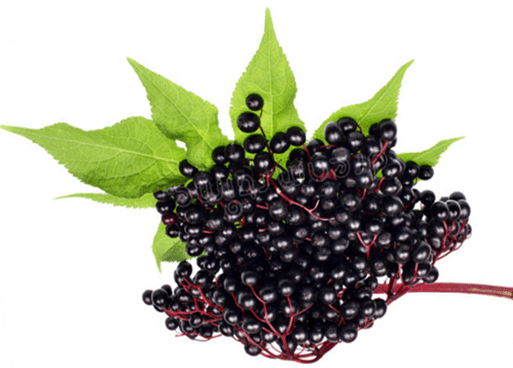
What are the Key Varietals?
For the food and nutraceutical industries, three subspecies of Sambucus nigra L. are of primary interest:
-
-
- Sambucus nigra ssp. nigra (European Elderberry): Native to Europe, North Africa, and parts of Asia, this is the most extensively studied and commercially cultivated subspecies.
- Sambucus nigra ssp. canadensis (American Elderberry): Native to a large portion of North America, this subspecies is gaining significant commercial attention because it may confer greater stability during processing compared with its European counterpart.
- Sambucus nigra ssp. cerulea (Blue Elderberry): Native to western North America, this subspecies is distinguished by its ecological resilience, including notable drought and fire resistance, making it a sustainable crop option in challenging climates.
-
The foundational nutritional value of elderberry provides a complex matrix of proteins, lipids, and fibre2.
A thorough understanding of the nutritional and phytochemical composition of elderberry is essential for its effective application as a functional ingredient. The distribution of these compounds varies significantly across different parts of the plant.
The Phytochemical Matrix
Not only are elderberries good sources of vitamins and minerals, but they also have an extensive and complex phytochemical composition4,8.
Phytochemicals form the cornerstone of elderberry bioactivities, responsible for its antioxidant properties, vibrant colour, and many of its health benefits.
The concentration and profile of these compounds vary dramatically depending on the elderberry subspecies, plant part, and growing conditions2,4. The types of phytochemicals found in elderberries include flavonoids, anthocyanins, and carotenoids among others.
Anthocyanins, Flavonols and Other Flavonoids
Anthocyanins are responsible for the characteristic deep purple-black colour of elderberries and are central to their market identity as an immune-supporting ingredient1,2.
Quantitative analysis reveals significant variation among subspecies where the European Elderberry contains the highest levels of anthocyanins, followed by the American Elderberry, whereas Blue Elderberry has the lowest anthocyanin content.
A noteworthy distinction of the American Elderberry is its high concentration of acylated anthocyanins, which can enhance pigment stability against degradation from heat and light, a highly desirable trait for food and beverage applications.
Beyond anthocyanins, elderberry is a rich source of other flavonoids, particularly flavonols, which contribute significantly to its overall antioxidant and anti-inflammatory capacity. The flowers and leaves are often more concentrated sources of these compounds than the berries.
Carotenoids and Tocopherols
Elderberries are also rich in carotenoids and tocopherols, with a distribution that is highly specific to the plant part.
Berries are an exceptionally potent source of the carotenoids Lutein and Zeaxanthin, which are recognised for their role in eye health.
In contrast, the leaves are the exclusive source of other powerful antioxidant carotenoids, Astaxanthin and Canthaxanthin.
Furthermore, leaves are the primary reservoir of α-tocopherol, the most biologically active form of vitamin E. Regional variations are also pronounced, with studies showing that samples from southern climates may accumulate higher levels of tocopherols.
Bioactivity and Health Benefits
The rich and diverse phytochemical profile of the elderberry translates into a broad spectrum of potential bioactivities1-5.
Figure 1 outlines the potential benefits of Elderberries and the way in which these are mediated through bioactive compounds have been proposed9.
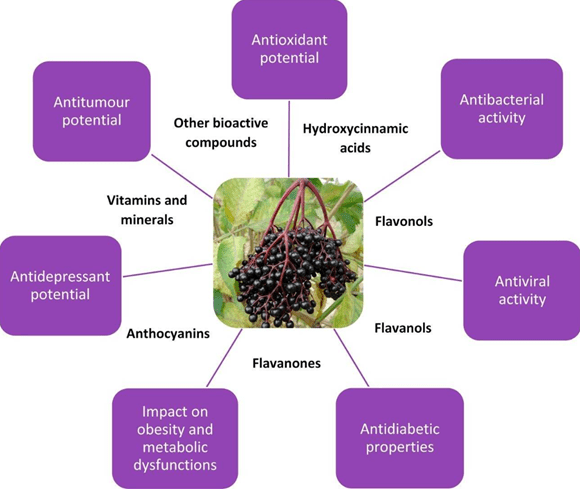
Figure 1. Proposed Potential Health Benefits of Elderberry9.
Potential Antioxidant Activity
A foundational mechanism underpinning many of the elderberry health benefits is its potent antioxidant capacity1,10.
The antioxidant effects are multifaceted including mechanisms such as direct free-radical scavenging and metal chelation, which position elderberry as a potential effective natural antioxidant ingredient.
Extracts from the flowers, berries, and leaves all demonstrate significant ability to neutralise harmful free radicals and mitigate oxidative stress, which is a key driver of ageing and chronic disease.
Anti-Inflammatory and Immunomodulatory Effects
The most well-known and commercially significant application of elderberry is for immune support, particularly in the context of respiratory health3. Its efficacy is rooted in anti-inflammatory and immunomodulatory activities.
Elderberry extracts have been shown to modulate the immune response by inhibiting the production of pro-inflammatory mediators. This action helps to balance the immune response, preventing excessive inflammation that can cause tissue damage during an infection10,11.
Neuroprotective Properties
An emerging area of research is the neuroprotective potential of elderberry. The bioactive compounds in elderberry can cross the blood-brain barrier and exert protective effects directly within the central nervous system5.
In vitro and in vivo studies have shown that elderberry extracts and their constituent polyphenols can protect neuronal cells from oxidative damage, reduce neuroinflammation, and improve cognitive and motor function in animal models.
Application in Functional Foods and Beverages
The application of elderberry is twofold: as a natural additive for colour and preservation, and as a core functional ingredient to deliver potential health benefits2.
Elderberry as a Natural Additive: Colour and Preservation
In response to strong consumer demand for “clean-label” products, elderberry serves as an excellent natural alternative to synthetic additives.
The final colour is pH-dependent, exhibiting red shades in acidic environments (e.g., yogurts, fruit beverages) and shifting towards blue and purple in more neutral or alkaline conditions 5,12.
Beyond colour, elderberry’s potential antioxidant properties make it a valuable natural preservative.
By inhibiting lipid and protein oxidation, elderberry extracts may extend the shelf-life and maintain the quality of perishable foods. This has been demonstrated effectively in meat products, where encapsulated elderberry extract was shown to significantly delay the oxidative processes that lead to rancidity and discolouration in beef burgers13.
Formulation with Elderberry as a Functional Ingredient
The primary driver for incorporating elderberry into food products is its status as a functional ingredient, capable of imparting health benefits beyond basic nutrition14. Its versatility allows for its use in a wide range of food matrices.
In the dairy sector, elderberry has been successfully incorporated into products such as yogurt and kefir15,16. Studies have shown that the addition of elderberry juice, puree, or pomace powder increases the product’s total phenolic and anthocyanin content, thereby boosting its antioxidant capacity.
However, formulation requires careful consideration of texture; direct addition of juice can decrease viscosity, while using restructured or encapsulated forms can maintain or even improve consistency and has been shown to lead to higher consumer acceptance.
The stability of the bioactive compounds is also a key factor, with evidence showing that elderberry anthocyanins can remain stable during the shelf-life of yogurt15, particularly when protected within a restructured matrix.
In bakery applications, elderberry adds both functional and nutritional value17. The incorporation of elderberry powder into gluten-free wafers has been shown to increase the final product’s flavonoid and mineral content while also improving batter properties by reducing delamination18.
Similarly, adding elderberry juice to croissants or fermented elderberry to bread enhances their antioxidant capacity and bioactive compound content without negatively impacting nutritional quality.
Fermentation has been shown to enhance the bioactivity of the elderberry before its incorporation, leading to a final product with a higher phenolic content and an extended shelf-life.
The meat industry represents a significant opportunity for elderberry application. Due to the high susceptibility of meat to oxidative degradation, the antioxidant properties of elderberry are particularly valuable.
A study on beef burgers demonstrated that an encapsulated elderberry extract acted as a highly effective “meat extender,” significantly delaying both lipid and protein oxidation more effectively than synthetic antioxidants during refrigerated storage13. This not only extends shelf-life but also adds a health-promoting, clean-label ingredient to the product.
Another novel application is the use of elderberry vinegar as a marinade or spray for grilled meats, which has been shown to inhibit the formation of harmful polycyclic aromatic hydrocarbons by over 80%19.
A central challenge in utilising elderberry is the need for thermal treatment to ensure safety conflicts with the desire to preserve heat-sensitive bioactive compounds.
Raw elderberries should not be consumed because certain parts contain cyanogenic glycosides (CNGs)2, which must be degraded through heating to render the product safe for consumption.
Therefore, it is critical that elderberry products intended for consumption must undergo a heating step.
Considerations
As consumer interest in more natural, proactive health products continues to grow, science-backed, botanical ingredients, such as elderberry, have an opportunity to take a further foothold in the health and wellbeing market.
While future studies are needed to further confirm the efficacy of elderberries and how they mediate immune benefits, the research has shown that, at a minimum, elderberry is a safe option with the botanical showing no evidence of over stimulating the immune system.
The functional potential of an elderberry ingredient is not uniform. Factors such as climate, soil type, and genotype directly influence the concentration of key bioactive compounds.
Therefore, sourcing elderberry cannot be a simple commodity-based decision. It requires a strategic approach that aligns the specific phytochemical profile of a given source with the desired health benefit and final product application, moving beyond a generic “elderberry extract” to a precisely characterised, high-performance functional ingredient.